
Mount Kilimanjaro
7 Days
From US$ 2,169 per person
Overview
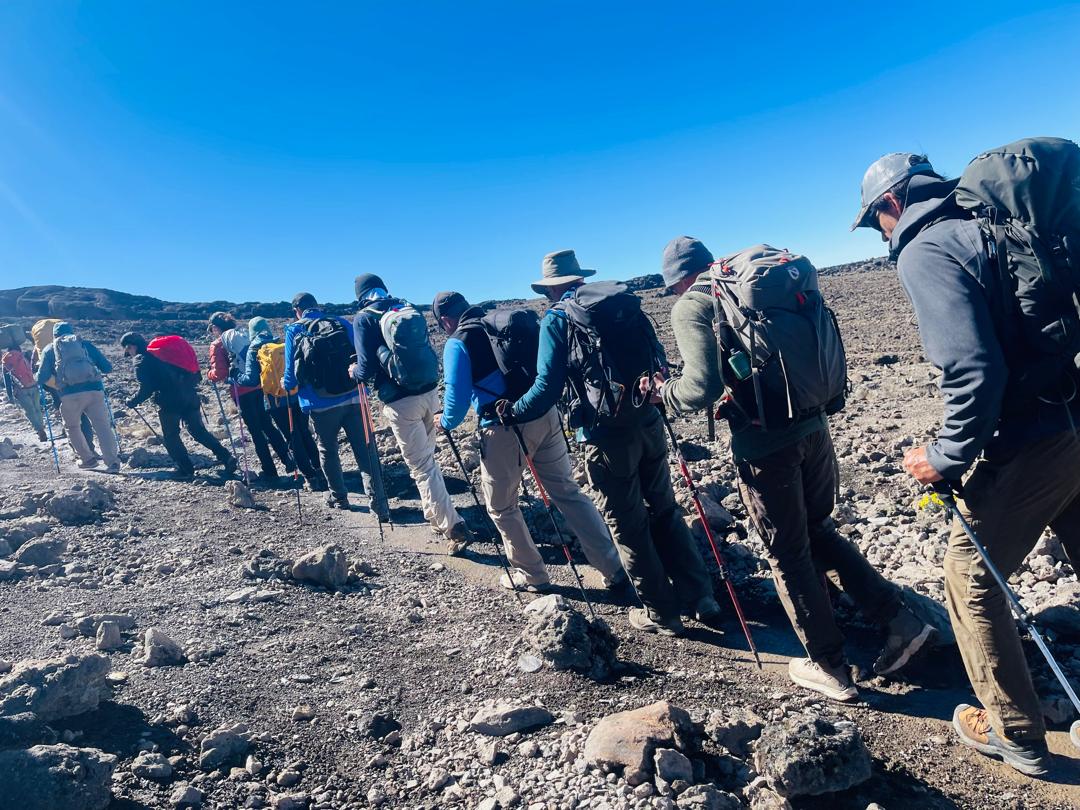
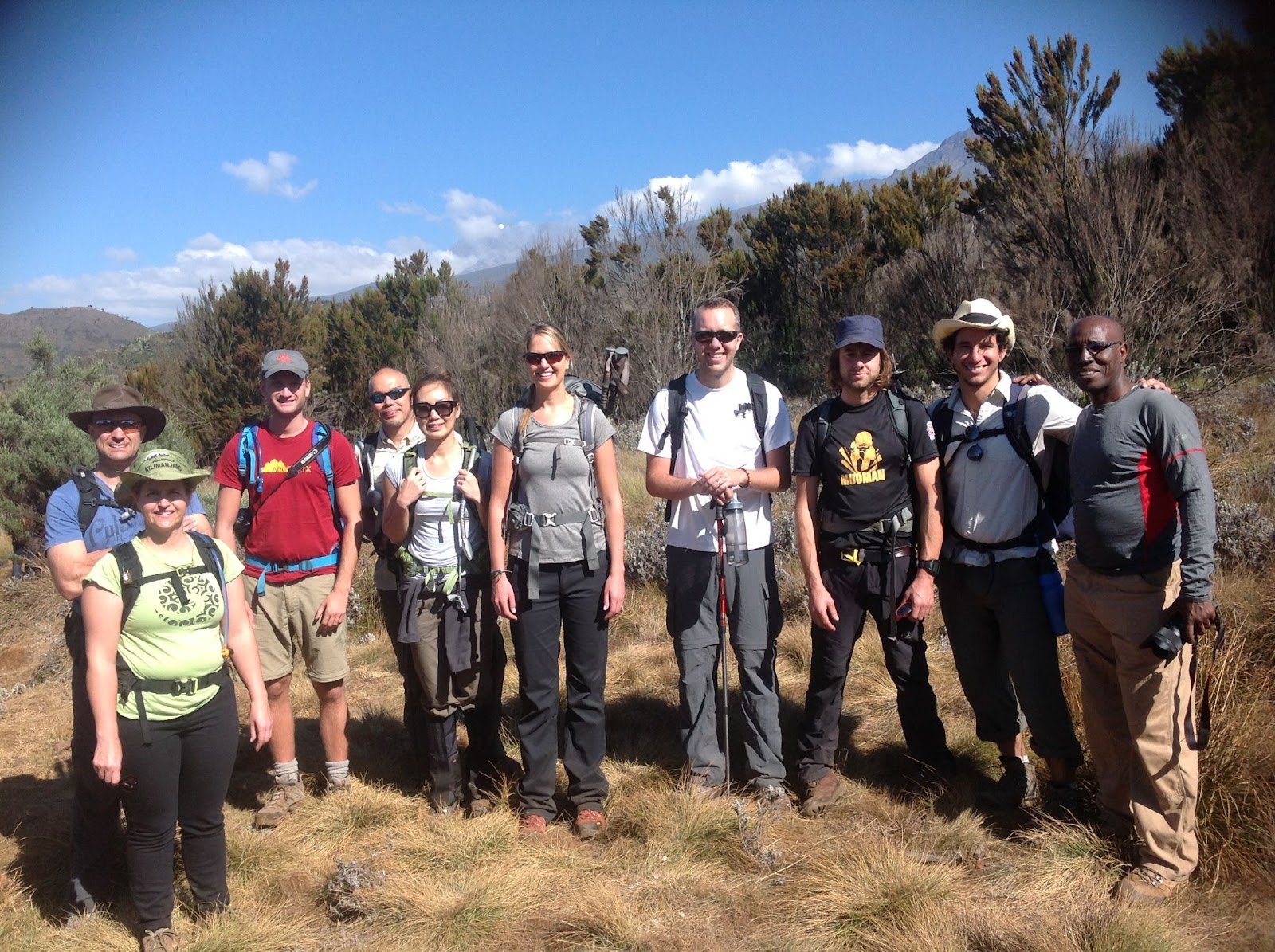
The Rongai route, known for its scenic beauty, leads climbers to Kibo from the lesser-traveled and arid northeastern part of Kilimanjaro. Departing in close proximity to the Kenyan border, this route offers breathtaking views of the African savannah and rugged Mawenzi. After passing Mawenzi Tarn Camp, climbers will come across the sole mountain lake in Kilimanjaro National Park. The trail is well-established and passes through fir forests, rainforests, and alpine deserts. Although generally considered an easy route, some of the rockier stages in the summit area may prove to be more challenging. The descent follows the Marangu route, traversing through lush green rainforests on well-maintained paths. Overnight stays in mountain tents are mandatory throughout the climb.
Overview
Tour Summary
Itinerary
Inclusions
Accommodation
Trip Summary
Start: Arusha, Tanzania
End: Arusha, Tanzania
Destinations: Mount Kilimanjaro
Theme: Hiking
Age Requirement: 10 Years minimum
Physical level: Medium
Max group size: Any size
Itinerary
Day 1 – Kilimanjaro International/Arusha Airport – Arusha City:
Upon arrival at Kilimanjaro International Airport or Arusha Airport, you will be greeted and transferred to the city of Arusha. The rest of the day will be yours to enjoy at leisure. In the evening, you will attend a briefing in preparation of your upcoming trekking adventure. You will spend the night at Tulia Boutique Hotel and Spa to overnight on Bed and Breakfast basis.
Day 2 – Arusha – Nalemoru Gate(1,990m) – Simba Camp (2,625m):
After breakfast you will be driven around Mount Kilimanjaro to its north-western side and after 3 to 4 hours, you will arrive at the Nalemoru Gate. After the registration process has been completed and your luggage has been divided between the porters, your adventure begins. The path runs alongside mountain farmers’ fields and pine forests before it enters the sparse mountain forest zone, where black and white colobus monkeys can often be seen. After an approximate 3 to 4 hour hike, you will reach the Simba Camp where you will spend the night. Breakfast, Lunch, Dinner included.
Day 3 – Simba Camp(2,625m) – Second Cave Camp:
Today’s trek passes through the heather and moorland zones and the views of Mawenzi and the vast Kenyan steppes are nothing short of grand. You will have lunch at the Second Cave (3,450 m) and after a short break; you will cross the undulating terrain to Kikelewa Camp. This camp boasts with incredible views and after a strenuous day’s climb, you can relax and take in its peaceful ambience. Breakfast, Lunch, Dinner included.
Day 4 – Second Cave Camp – Kikuletwa Camp:
From Second Cave the path takes an abrupt south-easterly turn directly towards the jagged peak of Mawenzi. Traversing open moorland you stumble into Kikelewa Camp, situated by a couple of caves by the Kikelewa River with giant groundsels and lobelias flourishing nearby. The views start to open up and from Kikelewa Camp and you will see for yourself how huge Mount Kilimanjaro is. It is 11,300 ft. to 11,811 ft., 4 miles, and it also takes at approximately 3 – 4 hours. Breakfast, Lunch, Dinner included.
Day 5 – Kikuletwa Camp (3,630m) – Mawenzi Tarn Hut(4,310m):
The typical senecien vegetation will soon disappear and the scenery will become more barren with the occasional rock formations. In good weather you can enjoy the breath-taking views of the Kibo and Mawenzi summits as well as Kenya’s savannah grasslands. After passing a few more rock formations, you will arrive at the Mawenzi Hut. For many mountain climbers, it is the most atmospheric camp on the mountain. Breakfast, Lunch, Dinner included.
Day 6 – Mawenzi Tarn Hut(4,310m) – Kibo Hut(4,700m):
On a relatively easy path, today’s leg takes you over the Kibo Saddle. A lack of vegetation is characteristic for the landscape here as only a few types of grass and other plant species can survive in this dry area and thin air. Just before today’s destination is reached, one last rock passage has to be conquered. Finally you will arrive at the Kibo Hut, where you can relax and mentally prepare yourself for tomorrow’s summit stage. Breakfast, Lunch, Dinner included.
Day 7 – Kibo Hut(4,700m) – Uhuru Peak(5,895m)- Horombo Hut(3,700m):
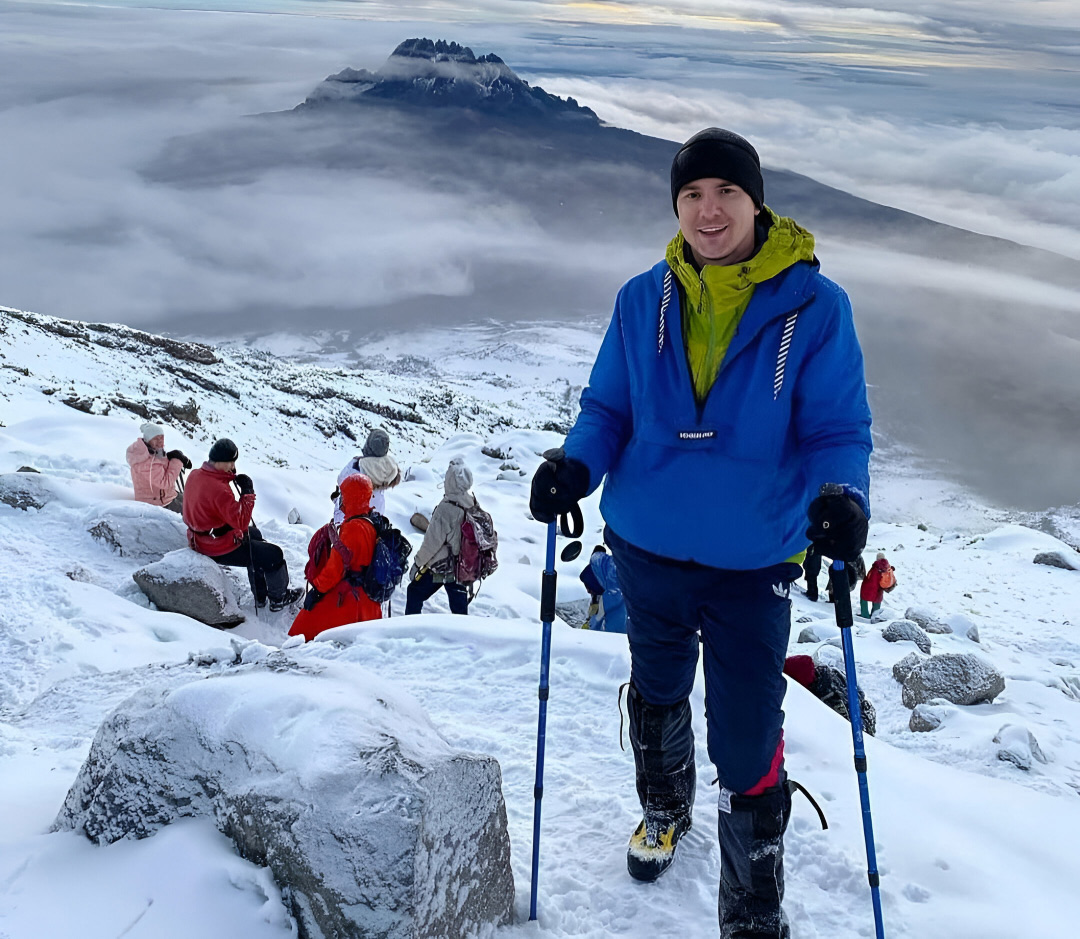
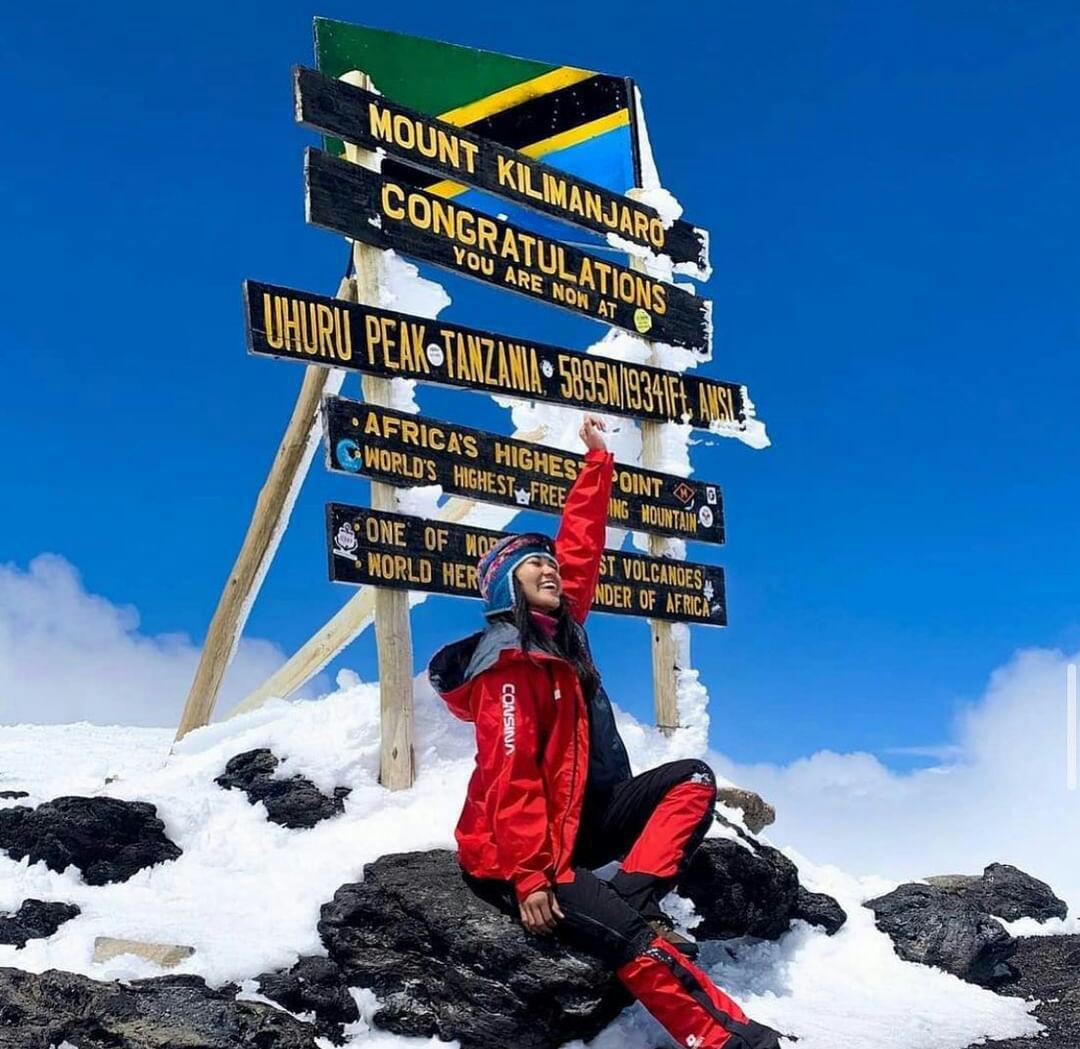
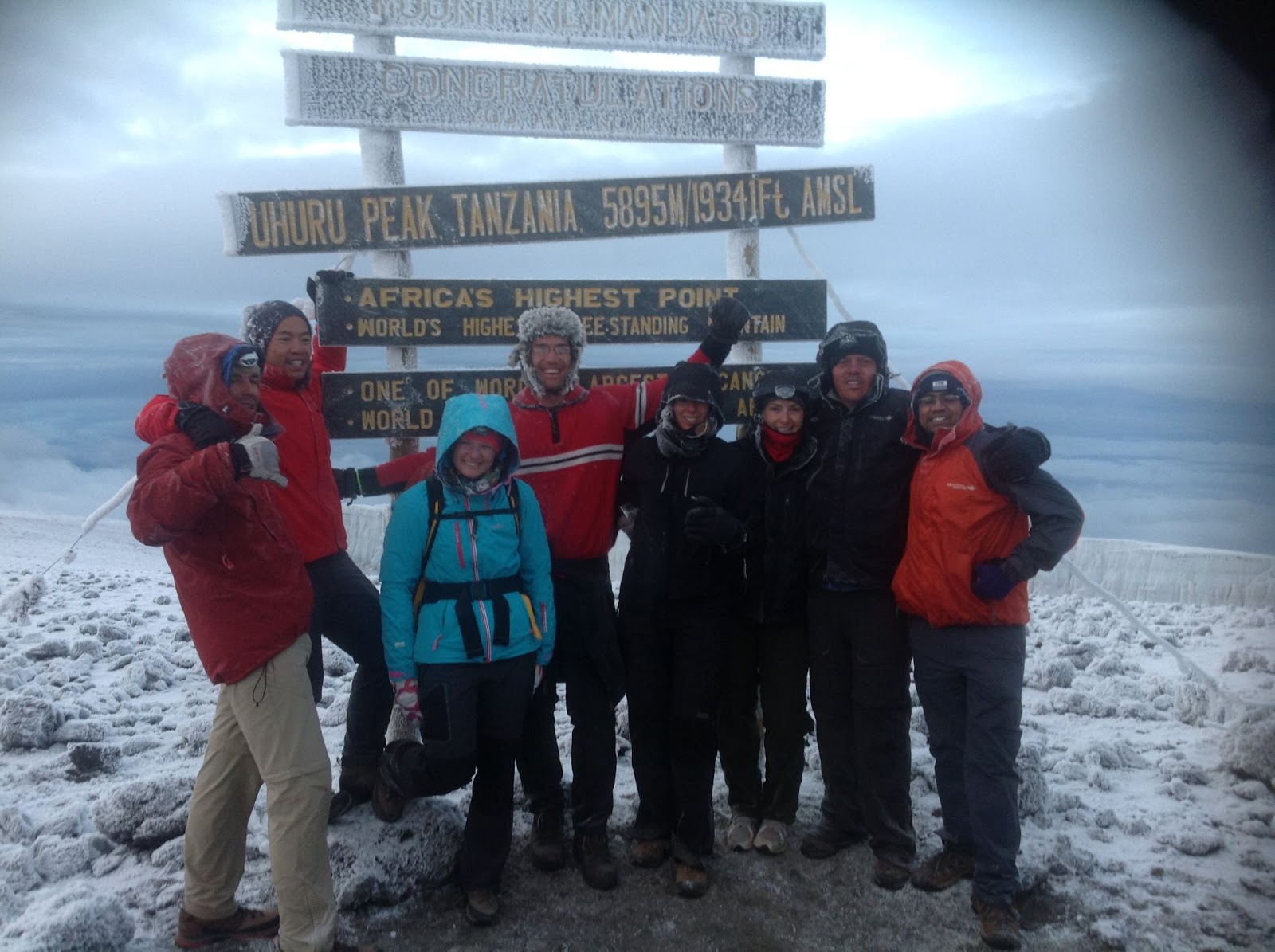
The climb begins at around 00:00 h and after a 5 to 7 hour walk on frozen volcanic ash, you will reach Gillman’s Point (5,715 m) on the crater’s edge. The sun rays will warm you while you trek for another 1 to 2 hours until you reach Uhuru Peak and finally stand on “Africa’s Roof”. The descent on the now thawed lava ash runs almost along the same route and you will arrive at the Kibo Hut in the late morning. A warm meal will be served and after a well-deserved break, the descent continues to the Horombo Hut.
Breakfast, Lunch, Dinner included.
Day 8 – Horombo Hut(3,700m) – Marangu Gate(1,860m) – Drive Back to Arusha
After trekking for approximately 5 to 6 hours, you will have managed the easy descent and you will return to the Marangu Gate during the early afternoon. You will say goodbye to your mountain crew and a short transfer will take you back to the Sal Salinero Hotel. Here you can take a warm and relaxing shower and celebrate your achievement. Stay overnight at Tulia Boutique Hotel & Spa on Bed and Breakfast.
Day 1 – Arrival
Day 2
Start: Nalemoru Gate (1,990 m)
Finish: Simba Camp (2,625 m)
Altitude:↑ 635 m
Walking time: 3-4hrs
Day 3
Start: Simba Camp (2,625 m)
Finish: Second Camp
Altitude:↑ 1005 m
Walking time: 5-6hrs
Day 4
Start: Second Cave Camp
Finish: Kikelewa Camp
Walking time: 3-4hrs
Day 5
Start: Kikelewa Camp (3,630 m)
Finish: Mawenzi Tarn Hut (4,310 m)
Altitude:↑ 680 m
Walking time: 3-4hrs
Day 6
Start: Mawenzi Tarn Hut (4,310 m)
Finish: Kibo Hut (4,700 m)
Altitude:↑ 390 m
Walking time: 4-6hrs
Day 7
Start: Kibo Hut (4,700 m)
Finish:
Uhuru Peak (5,895 m) – Horombo Hut (3,700 m)
Altitude:↑ 1,195 m ↓ 2,195 m
Walking time: 12-14hrs
Day 8
Start: Horombo Hut (3,700 m)
Finish: Marangu Gate (1,860 m)
Altitude:↓ 1,840 m
Walking time: 5-6hrs
How are emergencies handled during the Kilimanjaro climb?
In the event of an emergency during the Kilimanjaro climb, the mountain rescue services in Tanzania are not comparable to those found in the European Alps. If you cannot walk, you will either be carried or transported on a wheeled stretcher, which is an unpleasant experience. It is important to only push yourself as far as your body allows to prevent emergencies. Helicopters are not often deployed due to altitude limitations. It is recommended to have adequate health insurance coverage for medical expenses, including rescue and repatriation costs.
Is vaccination required for Tanzania?
The Tanzanian health department does not require vaccinations for entry. However, visitors are advised to receive a yellow fever vaccination as Tanzania is a yellow fever region. Additionally, it is recommended to have all other shots such as Tetanus, Diphtheria, Polio, and Hepatitis A & B up to date. Malaria is present in Tanzania, but there are no mosquitoes at high altitude. It is advisable to consult with your doctor or travel clinic for taking any precautionary medication.
What are Tanzania’s visa requirements?
For most travelers, it is possible to obtain a visa upon arrival. It is still every visitor’s obligation to check the latest visa regulations with their respective embassies. Every traveler is responsible for carrying the required travel documents.
What kind of clothes and gear are recommended for Kilimanjaro?
There are specific items that should be packed for a Kilimanjaro climb, and a detailed packing list is provided once the booking is confirmed. For convenience, essential clothing items and gear are available for rent.
Is tipping required for the mountain crew?
Tipping the mountain crew is a common practice, and gratuities are a large portion of the crew’s income, so they are highly appreciated. Recommended tipping amounts per group, not per person, are provided by the tour provider.
Should I bring extra money?
It is recommended to bring extra money for tips, souvenirs, and personal expenses. If bringing USD, it is essential to ensure that the bills have been printed after 2004 as earlier printed ones will not be accepted.
How can I cope with altitude sickness during the climb?
Almost everyone climbing Kilimanjaro will be affected by altitude sickness in some way. Symptoms include headaches, fatigue, loss of appetite, and nausea. It is essential to replace lost body fluids by drinking enough water and taking magnesium to prevent muscle cramps. Mild symptoms allow continuing the hike, but severe altitude sickness is a serious matter and can be life-threatening. It is vital to bear in mind that a medical descent may be required.
What meals will be provided during the climb?
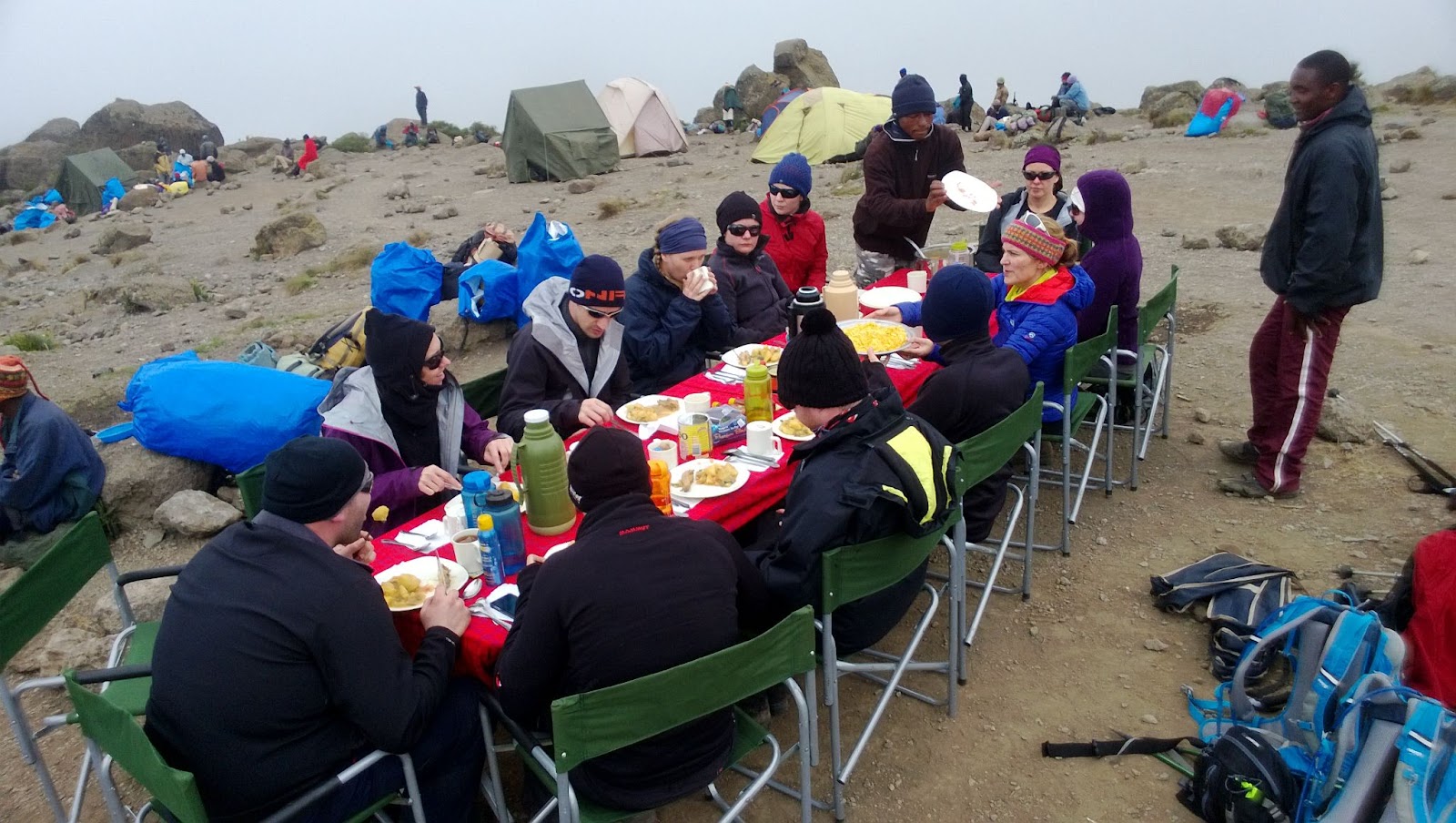
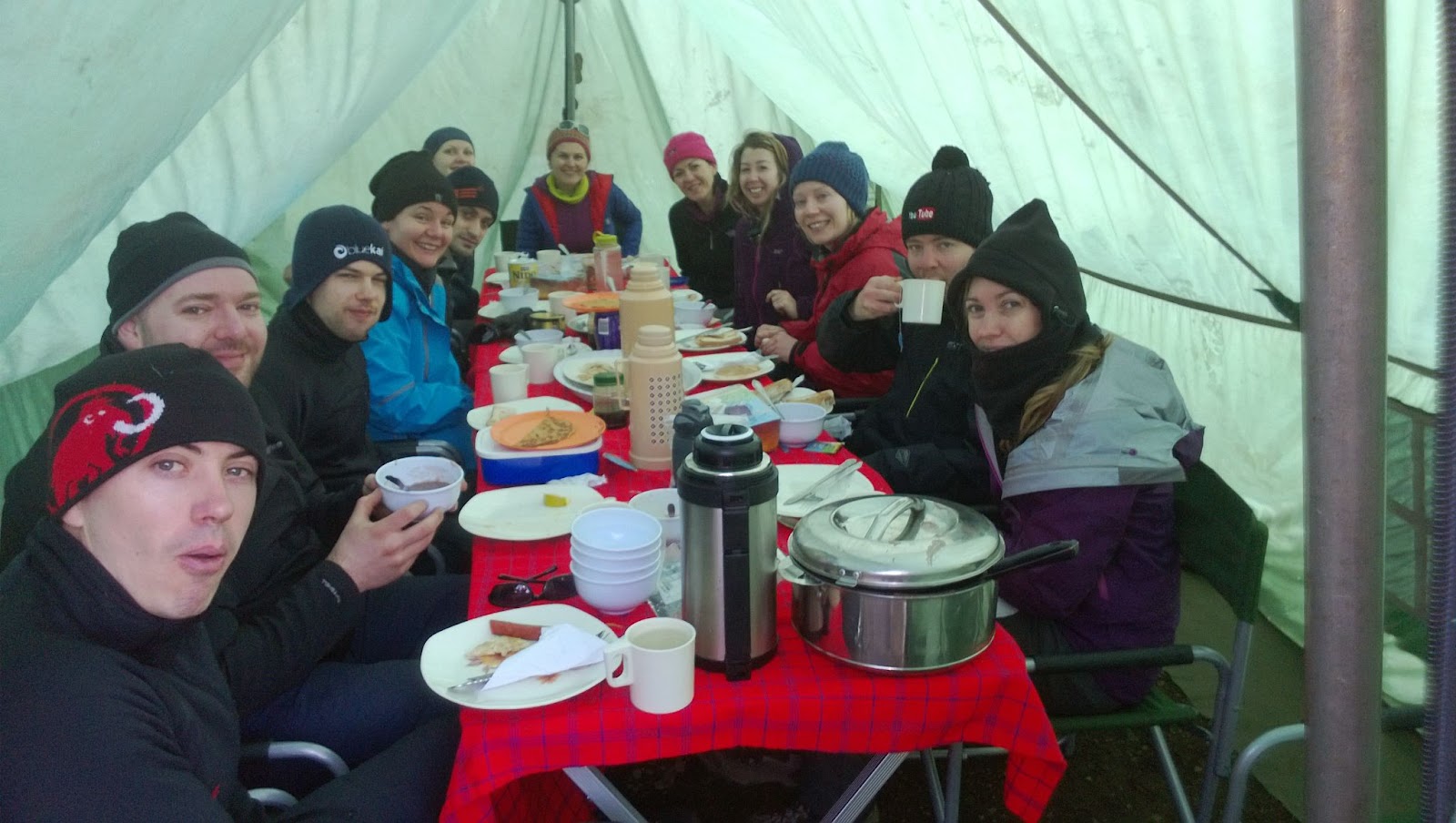
Meals are included in the itinerary. For breakfast, there is a choice of fruit, scrambled eggs, porridge, toast, jam, hot chocolate, coffee, or tea. Lunch is provided in a lunch box containing sandwiches, boiled eggs, chicken, etc. Dinner consists of soup and bread followed by meat or poultry with starch (i.e., chips, mashed potatoes, pasta, or rice) and vegetables, topped off with dessert in the form of fresh fruit, hot chocolate, coffee, or tea, and milk. Special dietary requirements or food allergies can be catered with advanced notification.
What are the ablution facilities like?
Basic long drops (simple latrines) are available, and climbers are provided with a bowl of warm water for daily wash.
How big is the group?
This is a private tour, and there won’t be any other climbers joining the group. The group will only consist of the people who chose to travel together and their mountain crew.
Is there an age limitation for this climb?
Yes, there is an age limitation for this climb. Climbers must be at least 18 years old to participate. This is to ensure that climbers have the necessary physical and mental maturity to undertake the climb safely and responsibly.
Can I bring my own climbing gear?
Yes, you are allowed to bring your own climbing gear. However, it must meet our safety requirements and pass a safety inspection before use. If you are unsure whether your gear meets our safety standards, we recommend renting equipment from our facility.
Do I need prior climbing experience?
Prior climbing experience is not required, but it is recommended. Our climb is designed to be accessible to climbers of all skill levels, but it can be physically demanding. We recommend that you are in good physical shape and have some familiarity with climbing techniques.
Is there a weight limit for climbers?
Yes, there is a weight limit for climbers. Climbers must weigh between 100 and 250 pounds to participate. This is to ensure that our safety equipment can support your weight and that you can physically handle the demands of the climb.
What happens in case of inclement weather?
In the event of inclement weather, we may need to postpone or cancel the climb for safety reasons. We will do our best to notify you as soon as possible if this occurs and work with you to reschedule your climb for a later date.
Is there a refund policy?
We offer a full refund for cancellations made at least 48 hours prior to the scheduled climb time. Cancellations made within 48 hours of the scheduled climb time will not be refunded. However, we understand that unforeseen circumstances can arise, and we will work with you to reschedule your climb for a later date if possible.
End of the Trek
Price: US$ 2,169 per person
Single Supplement: US$ 300. This is applicable for a single climber only.
Price Includes:
- Kilimanjaro trekking according to the itinerary
- Professional, English-speaking guide
- Mountain crew (cook & porters)
- Overnight stays in hotels and mountain tents
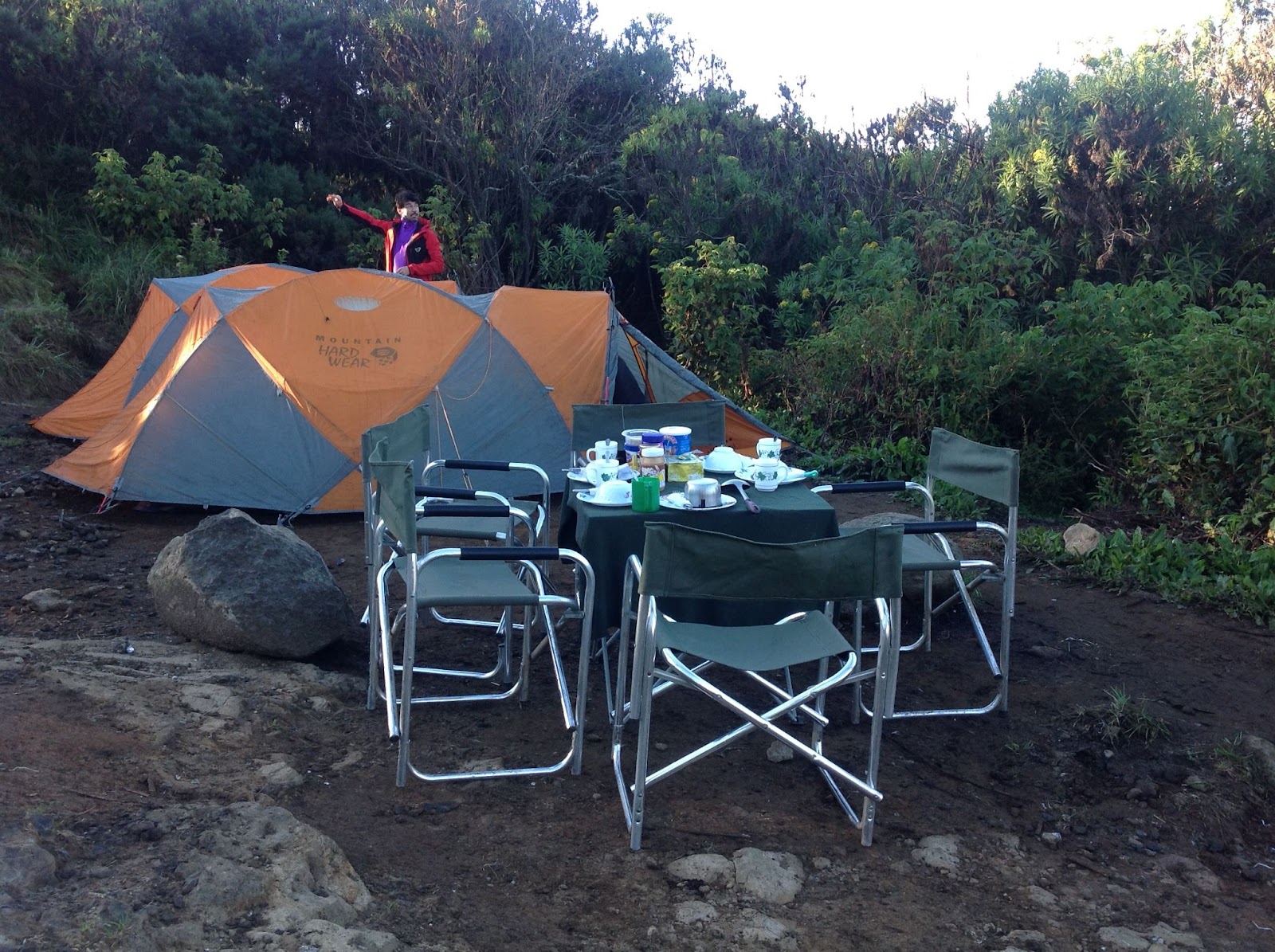
- Camping equipment (tents, sleeping mats, chairs, tables etc.)
- Portable toilet and toilet tent
- Meals according to the itinerary
- Drinking water
- All national park fees
- All mentioned transfers
Price Excludes:
- Sleeping bag
- Flights
- Optional activities
- Alcoholic and soft drinks
- Visa fees
- Tips
- Personal spending money for souvenirs etc.
- Travel insurance
Accommodation
Bookings
Let's plan your African Safari.
Follows the steps below, make sure you everything and submit the form. We will get back you as soon as possible.
FAQs
1. What does the 6-Day Ultimate Big 5 Tanzania Lodge Safari include?
In this mid-range segment, guests experience guided game drives, full-board lodge accommodations, park entry fees, airport transfers, meals per itinerary, and 1.5 liters of bottled water per day. Other features of a 6-Day Ultimate Big 5 Tanzania Lodge Safari experience
include a walking safari and an excursion to Materuni Waterfalls.
2. What national parks and destinations are covered under this safari?
In this mid-range segment, guests experience guided game drives, full-board lodge accommodations, park entry fees, airport transfers, meals per itinerary, and 1.5 liters of bottled water per day. Other features of a 6-Day Ultimate Big 5 Tanzania Lodge Safari experience
include a walking safari and an excursion to Materuni Waterfalls.
3. What sort of wildlife is there to see during this tour?
The possibility to see the Big Five is there, plus lions, elephants, buffalo, leopards, rhinos, zebras, wildebeests, giraffes, hippos, and a few species of birds and herbivores, depending on various terrain types.
4. How much does the Tanzania safari lodge charge, and what group sizes does it cater to?
The said Tanzania safari lodge costs US$ 2,746 per person for a private 2-person group and US$ 2,307 per person for a 4-person group. However, there is no fixed maximum group size.
5. Are flights and visa fees included in the package?
No, the price excludes international flights, visa fees, optional activities, Zanzibar extensions, drinks, personal expenses, tips, and travel insurance.
6. What type of accommodation is provided during the safari?
During the 5 days Tanzania safari, guests stay in comfortable mid-range lodges and tented camps such as Mawe Mawe Manyara Lodge and Osinon Camps and Lodges. All the accommodations offer full-board services while being carefully selected for their comfort and proximity to key wildlife areas.
7. Is the Londorossi Route suitable for first-time climbers?
Yes, the Londorossi Route is ideal for both beginners and experienced trekkers. It offers a longer, more gradual ascent that helps with acclimatization. While the route begins at a higher altitude, making early acclimatization crucial, it provides scenic views and a quieter trail compared to the busier routes.
8. What is the significance of the Londorossi Gate?
The Londorossi Gate is the official entry point for both the Londorossi and Lemosho routes. It’s where climbers complete their registration and meet the crew before starting their mountain journey. From here, vehicles usually transport trekkers to the higher altitude of Morum Hill to begin the hike.
9. How does the Lemosho route compare to other routes?
The Lemosho route is one of the most scenic and least crowded options for climbing Mount Kilimanjaro. Known for its stunning vistas and excellent success rate, it follows much of the original Londorossi/Shira path while offering improved acclimatization and trail access.
10. What should I expect from the Londorossi hike?
The Londorossi hike begins at higher elevations, which means you get above the rainforest zone quickly. Expect breathtaking views of the Shira Plateau and plenty of acclimatization time. This hike is quieter and ideal for those seeking solitude and immersion in nature.
11. Why choose the Kilimanjaro Lemosho trail with Aardvark expeditions?
Choosing Kilimanjaro Lemosho with Aardvark expeditions means expert guidance, personalized service, and a safe, memorable adventure. Our knowledgeable guides and dedicated team ensure your experience is not just a trek but a lifetime memory, tailored to your pace and comfort.
12. What destinations are covered in this 6 days Tanzania safari?
This tour includes visits to Tarangire National Park, Serengeti National Park, and the Ngorongoro Crater—three of the most iconic wildlife destinations in Tanzania.
13. Is this an affordable Tanzania safari for small groups?
Yes, it’s ideal for small groups. For 4 people, the price is just $1,627 per person, making it one of the most affordable Tanzania safari options without compromising quality.
14. What type of accommodation is provided?
Guests stay in mid-range lodges such as Arusha Planet Lodge, Eileen’s Trees Inn, Serengeti Mawe Tented Camp, and Ngorongoro Rhino Lodge, ensuring comfort throughout the journey.
15. Are meals and park fees included in the price?
Yes, the package includes meals as per the itinerary, 1.5 liters of mineral water daily, all national park fees, and mentioned activities.
16. Why should I choose Aardvark Expeditions for Tanzania safari tours?
Aardvark Expeditions combines experience, expert guides, and seamless planning to deliver memorable Tanzania safari tours with rich wildlife encounters and personalized service.
17. What destinations are covered in the 5 Days Tanzania Lodge Safari?
This safari includes visits to Lake Manyara National Park, Serengeti National Park, and the Ngorongoro Crater—three of Tanzania’s most iconic wildlife destinations.
18. What makes this tour different from other Tanzania Lodge Safari Packages?
Aardvark Expeditions offers expertly planned itineraries that blend adventure with comfort. This package includes top-rated lodges, professional guides, and unique experiences like early morning game drives and optional cultural visits.
19. Is the 5 Days Serengeti and Ngorongoro Safari suitable for families?
Yes, this safari is perfect for families, couples, or solo travelers. It offers moderate driving times, child-friendly accommodations, and diverse wildlife viewing opportunities.
20. What type of accommodation is included?
Guests stay in mid-range lodges such as Eileen’s Trees Inn and Embalakai Luxury Tented Camp, offering a balance of comfort and proximity to nature.
21. Are transfers and park fees included in the tour cost?
Yes, all airport transfers, park entry fees, accommodation, meals, and mineral water are included. Optional activities, drinks, and international flights are excluded.
22. Is the Crater Camp suitable for all trekkers?
Crater Camp is ideal for experienced or well-acclimatized trekkers. Due to its high altitude and extreme conditions, it’s best suited for those with prior trekking experience or excellent physical fitness.
23. How is the 9 Days Kilimanjaro Lemosho Route different from the standard route?
This version includes an overnight stay at Crater Camp, offering better acclimatization and a more immersive summit experience. It also adds one extra day to the itinerary.
24. What makes the Kilimanjaro Crater Overnight Trek special?
Unlike other routes, this trek allows you to sleep just below the summit. The silence, starry sky, and proximity to the glaciers make it a once-in-a-lifetime experience few climbers ever get to enjoy.
25. What kind of support does Aardvark provide during the trek?
Aardvark provides expert guides, porters, high-quality camping gear, meals, and full logistical support. We prioritize safety, ethical practices, and personal comfort throughout your journey.
26. Can I visit the Reusch Crater and glaciers from Crater Camp?
Yes! From Crater Camp, you can take an optional one-hour hike to Reusch Crater or explore the stunning Furtwangler Glacier nearby. These sights are rarely seen by most climbers.
27. When is the best time of year to book a Tanzania Lodge Safari?
To climb Mount Meru in Tanzania climb Mount Meru Tanzania, the optimal seasons are the dry months from June to October and January to February, when wildlife sightings are at their peak and weather conditions favor smooth travel.
28. Are dietary restrictions and preferences accommodated during the safari?
Yes, Aardvark Expeditions lodges and camps offer customizable meal plans and can cater to vegetarian, vegan, gluten-free, and other dietary needs with advance notice.
29. What should I pack for the 6-day Tanzania Lodge Safari adventure?
Lightweight clothing in neutral colors, sunscreen, a good camera, binoculars, insect repellent, hiking shoes, and a hat are essentials—plus a sense of curiosity and adventure!
30. Is Wi-Fi available at the safari lodges?
While some mid-range lodges offer limited Wi-Fi access, connectivity may be inconsistent due to remote locations, encouraging guests to disconnect and immerse themselves in nature.
31. Can children join the safari? Is it family-friendly?
Absolutely! The safari can be tailored for families with children, offering flexible schedules, educational wildlife encounters, and accommodations suited for all ages.
32. What makes Aardvark Expeditions different from other trekking companies?
Aardvark Expeditions stands out for its personalized service, experienced guides, and attention to detail, offering a more intimate and enriching trekking experience compared to larger, less flexible operators.
33. Is the 4 Days Mount Meru Climb suitable for beginners?
Yes, the climb is ideal for both beginners and experienced hikers, especially those preparing for Kilimanjaro, as the gradual ascent helps with acclimatization and builds stamina.
34. Will I have an experienced guide during the trek?
Absolutely. Every group is accompanied by a certified, English-speaking guide who is well-versed in the terrain, safety protocols, and local culture.
35. What kind of support staff will be with us during the climb?
Your trek will include a dedicated team of porters, a cook, and an armed park ranger to ensure your safety, comfort, and well-being throughout the journey.
36. Does Aardvark Expeditions offer cultural interaction during the tour?
Yes, the experience includes insights into Meru culture, with local guides sharing stories, traditions, and knowledge of the region to enhance your connection with the land.
37. Is Mount Meru harder than Kilimanjaro?
Mount Meru is slightly less demanding than Kilimanjaro but still requires good fitness due to steep sections and altitude.
38. Do I need prior trekking experience?
No prior experience is necessary, but being physically fit and used to walking long distances is recommended.
39. Are there chances of seeing wildlife?
Yes! Arusha National Park is rich in wildlife, and you may see giraffes, buffalo, monkeys, and various bird species.
40. What’s the best time to trek Mount Meru?
The best months are June to February. Avoid the rainy seasons (March–May and November).
41. Is altitude sickness a concern on Mount Meru?
While it’s lower than Kilimanjaro, altitude sickness can still occur. The itinerary is designed for gradual acclimatisation.
42. What is included in the Tanzania luxury safari 7 days package?
This package includes accommodation in luxury lodges, a private 4×4 safari vehicle, park fees, professional English-speaking guide, daily meals as per itinerary, and airport transfers. It ensures a seamless and comfortable safari experience.
43. What wildlife can I expect to see during the safari?
You’ll likely encounter the Big Five—lion, elephant, leopard, rhino, and buffalo—along with wildebeests, zebras, gazelles, hippos, and a wide variety of birds. The Serengeti and Ngorongoro Crater are known for their exceptional game viewing.
44. Is this 7 days Tanzania safari itinerary suitable for families?
Yes, this itinerary is ideal for families seeking a mix of luxury, adventure, and educational value. The journey is well-paced, with comfortable lodges and guided tours tailored to all ages.
45. What type of accommodations are provided?
Guests stay in top-tier lodges such as Serengeti Serena Safari Lodge and Ngorongoro Serena Safari Lodge, offering exceptional service, stunning views, and premium comfort throughout the trip.
46. Why choose Aardvark for luxury safari tours Tanzania?
Aardvark offers expertly curated safaris combining opulence, wildlife, and cultural immersion. Their attention to detail, experienced guides, and customized service make them a top choice for discerning travelers.
47. What makes the Rongai Route Kilimanjaro different from other routes?
The Rongai Route Kilimanjaro is the only trail that approaches the mountain from the north, near the Kenyan border. It's less crowded than other routes and offers diverse scenery, including rainforest, alpine desert, and the iconic Mawenzi Peak.
48.Is the 6 day Rongai trek suitable for beginners?
Yes, the 6 day Rongai trek is considered one of the easier Kilimanjaro routes due to its gradual ascent. While some summit sections are rocky and challenging, the trail itself is well-established and ideal for first-time climbers seeking a quieter experience.
49. What kind of accommodation is provided during the trek?
Overnight stays are in mountain tents provided by the operator. All camping equipment, including sleeping mats, chairs, and tables, is included. Comfortable hotels are used before and after the trek
50. What should I pack for the trek?
You should bring a sleeping bag, appropriate trekking clothing, waterproof gear, and personal essentials. Aardvark provides detailed packing suggestions along with Rongai climbing tips to help you prepare effectively.
51. How do I get started with booking this climb?
Start by contacting Aardvark Expeditions. Their team handles everything from documentation to transfers, ensuring a hassle-free booking and trekking experience.
52. What makes Aardvark Expeditions different from other trekking companies?
Aardvark Expeditions stands out for its personalized service, experienced guides, and attention to detail, offering a more intimate and enriching trekking experience compared to larger, less flexible operators.
53. Is the 4 Days Mount Meru Climb suitable for beginners?
Yes, the climb is ideal for both beginners and experienced hikers, especially those preparing for Kilimanjaro, as the gradual ascent helps with acclimatization and builds stamina.
54. Will I have an experienced guide during the trek?
Absolutely. Every group is accompanied by a certified, English-speaking guide who is well-versed in the terrain, safety protocols, and local culture.
55.What kind of support staff will be with us during the climb?
Your trek will include a dedicated team of porters, a cook, and an armed park ranger to ensure your safety, comfort, and well-being throughout the journey.
56. Does Aardvark Expeditions offer cultural interaction during the tour?
Yes, the experience includes insights into Meru culture, with local guides sharing stories, traditions, and knowledge of the region to enhance your connection with the land.